
How do you build an emergency fund? Having an emergency fund or “Go to Hell” money brings a peace of mind that is hard to describe. You become unrestrained and no longer bound, as most people are, to the fears around losing a job. If you need to walk away from your job because of a micromanaging manager who only got the job because they knew the hiring manager and actually has no prior managerial experience, then you’re able to. In other words, once you realize it’s not really about the money more than it is about having options, this becomes a strong motivator.
For example, what if your manager asked you to take responsibility for a project that’s behind schedule, even through zero fault of your own? You’re basically been thrown under the bus. This actually happened to someone I know. Rather than compromise their values and reputation, that person gave notice later in the week.
By the way, let’s point out the obvious, just in case it’s far from obvious. “Go to Hell” money is money you have when you tell your manager to go to Hell. It gives you the freedom to not take their crap and walk away from an abusive relationship. Having an emergency fund is almost necessary if you’re to achieve financial freedom. For one, it frees you from the constraints imposed by your job. Once these shackles are lifted, you’re more free to pursue other avenues, like investments, a side gig, or even work on life projects that matter to you.
You can see some of the reasons why it’s good to have Go to Hell money. Now, let’s explore practical ways to build up this fund as soon as possible.
Determine How Much You Need
First, determine how much you need to build in your emergency or “Go to Hell” fund. Depending on your age and circumstances, you’ll want anywhere from 3 months to a year or more.
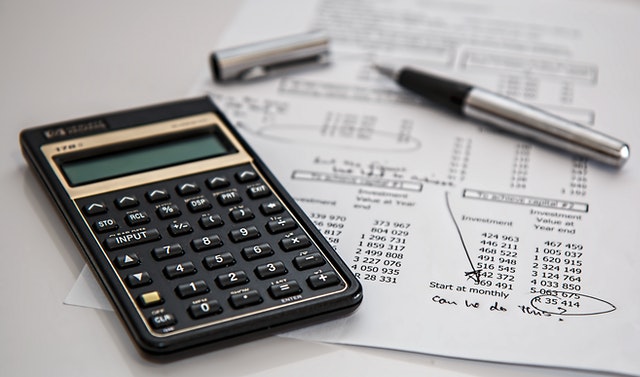
Print out your checking and credit card statements. Now, go through and highlight the items that are absolutely essential. These would be things such as
- Mortgage or rent.
- Medical bills
- Medical necessities (medication, syringes, insulin, treatments)
- Groceries. Are you wasting food? Do you really need to buy as much as you do? For starters, look at how much leftover food you’re throwing out.
- Tuition
- Gas for the cars
- Utilities (electric, gas, trash, water, etc)
- Any other things?
Enter Personal Capital: My Favorite Net Worth Tracking Tool
There are better ways to do this. For example, I recommend Personal Capital. It comes with a free net worth tracking tool. In addition, Personal Capital can also calculate your cashflow, which is how much you’re bringing in versus how much you’re spending. A negative value here means you’re spending more than you’re saving.
To use the Personal Capital tool, you will need to put in your usernames and passwords to the financial accounts you want tracked. For extra security in case they get hacked, Personal Capital says your account information is encrypted and stored on a outside server.
Hmmm…Giving someone my usernames and passwords to my bank accounts? I must admit it took me some time to get used to this idea. In the end, what persuaded me is realizing Personal Capital is a legitimate fiduciary. In other words, they help you invest your money, like Fidelity or Vanguard. They are now owned by Empowered Retirement, the largest holders of 401(k) accounts.
Going back to our discussion, if you’re young then I’d suggest just 3 months’ worth in your emergency fund. It should not take you long to find another job. If you’re older or in an industry where you face age discrimination, then you’ll make more of a buffer, say six months to a year. (Yes, I know age discrimination is illegal but that certainly doesn’t stop it from happening. This is subtle, especially in my field of engineering.)
Since the COVID-19 pandemic, I now suggest a buffer of over a year.
Figure Where the Money Is Going as You Build Your Emergency Fund
What you highlighted in the previous section is important. Equally as important is what you did not highlight. These are your discretionary spending items. It’s a fancy way of saying you don’t need to spend money on these things.
Discretionary spending would be on things such as music or video streaming services, Amazon Prime, daily stops to the coffee shop, beauty sessions, gadgets, colonic cleansings, monthly subscriptions to nutritional supplements, and that expensive gym membership.
Start Cutting Those Costs
Great! Now that you know where the money is going, cancel all the highlighted items. Subscription-based services are a huge money drain. Did you know that I haven’t had TV service for the past 15 years! I don’t watch TV. I used to have satellite TV. That’s $100+ more in savings every month.
Because I’m a heavy Internet user, I stream movies and shows at a fraction of the cost. I watch on-demand . Think about not only how much money you’re saving, but the time, too. Back when I had satellite, I was spending 3+ hours a night, just mindlessly watching whatever TV shows were on at the time.
When I cancelled satellite, I suddenly had 3 extra hours a night. Sure, it was strange, trying to find new things to fill in the time. It took some time to get used to developing a new routine. But that was the best decision I ever made. I started to engage in the hobbies that I “never had time for”, probably because I was “busy” watching TV.
As you can see, the how-to in building an emergency fund is relatively straightforward if you’re willing to become the CEO of your life and cut costs.
This is also a good time for you to start investing in yourself by reading books and learning about financial freedom. It won’t be forever. When you hit your magic number in your emergency fund, then you can easily go back to more leisure activities. You can go back to treating yourself to a latte every single day.
Or set up systems of rewards when you hit well-defined mileposts. For example, once you’re able to save at least $100 a month, then you’ll go back to getting that latte at least once a week.
Make the Best of a Situation
As an example, when the shelter-in-place for COVID-19 started, like most people I had to immediately give up my coffee runs at the local coffee house. I started to brew my own coffee. In the process, I discovered a fun hobby.
While it may seem that giving up your daily brew of coffee or eating out at restaurants is a lot to give up, there are as always plusses to the situation. For example, in starting to make my own coffee, besides discovering a new hobby I actually saved more money!
I used to pay $2 to $5 for a cup of coffee. Since making my own, I realized for the first time just how much sugar I was consuming. I also reduced the cost down to just $0.70 a cup.

Besides finding a new hobby, the coffee setup also ignited an interesting notion: What if I could work from home most of the time? I didn’t get that with my current job. In fact, starting on July 2021 I was required to go to work 5 days a week. This was a time when other tech companies decided to postpone returning to the office indefinitely, especially as new variants like delta and omicron starting coming out. Needless to say, that the Company valued their bottom dollar over our safety left a sour taste in my mouth. To this date, in December of 2021, HR has not said one word about the Pandemic or plans to keep its employees safe. When there were pockets of outbreak at the office, we were not informed. We only knew through whispers and gossip.
It’s Really a Mind-Set Shift When You Build Your Emergency Fund
I bring up this little mini-story as an example of what it means to when you build an emergency fund. While I opted to continue going to work, I also knew that at any moment I can just walk away from a company that does not care about its employees. Saving on coffee and working on home also brought to the forefront a new idea: It is possible to work from home. To date, I have found a new opportunity that lets me work from home 85% to 90% of the time!
And of course, when you take one thing out of your life (watching 3 hours of TV a night), you need to find something else to replace it. In my case, it took some time but I was able to replace it with constant study in finances and self-improvement. You’ll quickly realize that building an emergency fund on your road towards financial freedom really has more to do with your mindsets than the actual mechanics of saving.
Mechanics are easy. The why on doing something, then finding the motivation and discipline to keep doing them is a lot harder.
Automate Savings
What you do not have, you cannot spend. Start by setting up a savings account and automatically deposit money into this account every pay period. That way, you don’t think about it. When you start slashing costs from other areas (you are doing this, aren’t you?), you’re ensuring that you’ll have enough money to put into the savings account.
The nice thing about automating deposits is that if you fail to slash costs, you’ll notice it right away as you’ll not be able to make the payments. That will compel you into taking action.
Of course, while you’re at it, consider depositing the money into a high-yield savings account. This is different than the savings account offered by your bank, which is frankly a joke. Good ones to consider are Marcus by Goldman Sachs, Discover, and Synchrony. When in doubt, just go with the one that offers the highest interest rate.
Do not Invest When You Build This Emergency Fund

It’s tempting to put this money into a normal investment account, where you stand to gain 7% to 20%. This is a lot more than you’ll ever get with a high-yield savings account. There is of course a lot of risk with this approach.
The risk is you’ll lose money because the stock market is by nature volatile. I remember putting money into the stock market, thinking it would go up. The transaction had just been completed with additional stocks bought. Hours later, I lost several thousand dollars!
This just goes to show that when you build your emergency fund, it should be insulated from market volatility . It’s money you need to fall back on should you ever need it. It’s money that needs to be liquidated fast. Stocks and real estate take time to liquidate, and you’re far from a guarantee that you’ll get more than you put in. You’ll also have to consider short- and long-term capital gains taxes.
Eliminate Debt
There’s good debt and there’s bad debt. For instance, taking on debt to go back to school is good debt. Anytime you are taking on debt to invest in yourself, that’s a good thing.
For this discussion, we will be talking about bad debt, such as the high interest rate of credit cards. If you carry a balance that you’re paying interest on, do your best to pay off that balance as soon as you can.
First, determine how much you can pay every month and then automate the debt payment process! Then don’t think about debt anymore. Focus on wealth creation.
Once you pay off the balance, consider getting a rewards credit card. If you’re going to spend money, you might as well receive rewards for doing so. It is critical you first eliminate the interest-bearing balance before doing so or you will nullify any rewards you may be getting from such a card. Then, pay off the balance every month so that you do not carry interest payments. Only then may you reap the rewards of such a credit card.
Combine Multiple Errands When You Drive
Some people seem to shop for groceries almost every single day, while others only go once a week. Think about how much time and gas you’re spending if you go to the grocery store every single day. This also adds additional wear-and-tear to your vehicle.
Quick tip: To avoid over-spending at the grocery store, make a list of everything you need. Stick to it. We tend to make compulsive buys. There’s a reason why they stick the candies and magazines at the checkout lines and why they seem to make you wait when they could easily open up another checkout stand.
Combine multiple trips in as few outings as possible. For example, I deliberately plan my trips to accomplish more than one task at a time. I may need to go to Costco. While I’m there, I gas up the car. Afterwards, I may reward myself with some takeout at a local eatery. By doing this, I save time and money.
Granted, there are folks who have to drive every single day, like dropping off and picking up the kids to and from school. There are still creative ways to combine multiple errands. For example, if you need to drop off clothes with the dry cleaners, you might as well make that part of the drive.
The real plus side here is reducing the wear-and-tear on your vehicle, which decreases the chances of a costly repair. After all, when you build an emergency fund the last thing you want is an unexpected car repair that puts you back into the hole. The flip side is if you do need to make an emergency repair on your only vehicle, you will have the money.
Working a Gig to Build Your Emergency Fund
I’ve no illusions that it’s easier to build up an emergency fund sooner than later when you make more money. It’s just simple mathematics. Some people are literally living from paycheck to paycheck. They are just one paycheck away from a major financial catastrophe.
Despite your best intentions, it may not be possible to slash enough expenses to start seeing a possible cashflow. (I hope you’re really able to reduce your spending so you’re living well within your means.) Even if you’re able to, you may be saving just a few hundred dollars. While a good start to building up an emergency fund, it will take you a lot longer than if you took on a side gig and made some extra money.
Besides, there is an added side-effect of doing such a thing. That is to learn how to run your own business! You may in the process decide it’s more profitable and enjoyable to work your side gig as a full time job.
Maintaining the Discipline
This article is a lot longer than I originally intended. As I started looking at different ways you can build up your emergency fund, I realized it had to be long. There are no shortcuts in life. Everything you do is a sum of the little things.
Maintaining discipline and keeping the path is one of these things. Discipline is just saying you’ll do what you said you would do. Once you’ve developed the habit of this maintaining new discipline, everything becomes easier. You start doing things that were at one time new, scary, and even painful to you. You do it and realize it’s really not that scary or painful.
Once you have enough in your emergency fund, you may be tempted to spend that extra money again. Instead, I would suggest investing in the stock market, real estate, or whatever else you’re comfortable with.
There is just something oh-so-nice about spending a day at home doing nothing while your stock portfolio grows by several thousand dollars in that one day alone. This is the power of compounding interest. It will take some time to get to this point. It will require more money than more people will ever have for their net worth in their lifetimes. Just how much do you need to see this kind of fluctuation in your investments? About $200,000! Makes sense, especially if the market fluctuates by 1% on a daily basis. (1% of $200,000 is $2000) Through a significant mind-set shift and disciplined approached of saving and investing, you’ll eventually get here.
That’s an awesome place to be!
Note
There may be affiliate links in this article, which means I earn a commission for recommending products and services. I only recommend products and services which I have tried myself or that I have researched to my satisfaction.
—
The best financial advice in the world will fail you if you have bad mindsets around money. What are some examples of bad money mindsets? Investing is only for the rich. I can never afford that. Money is the root of all evil.
I had many of the same money mindsets that you may now have. Through a concentrated effort, I was able to change most of these around. In the process, I transformed from a clueless guy–feeling like he’s barely making it–to someone who’s achieved a measure of financial freedom.
I invite you to get your free gift, 7 Money Mindsets Preventing You From a Positive Cashflow, today.

Discover the 7 most common myths (false beliefs) around money that’s keeping you from having more money!